Posts

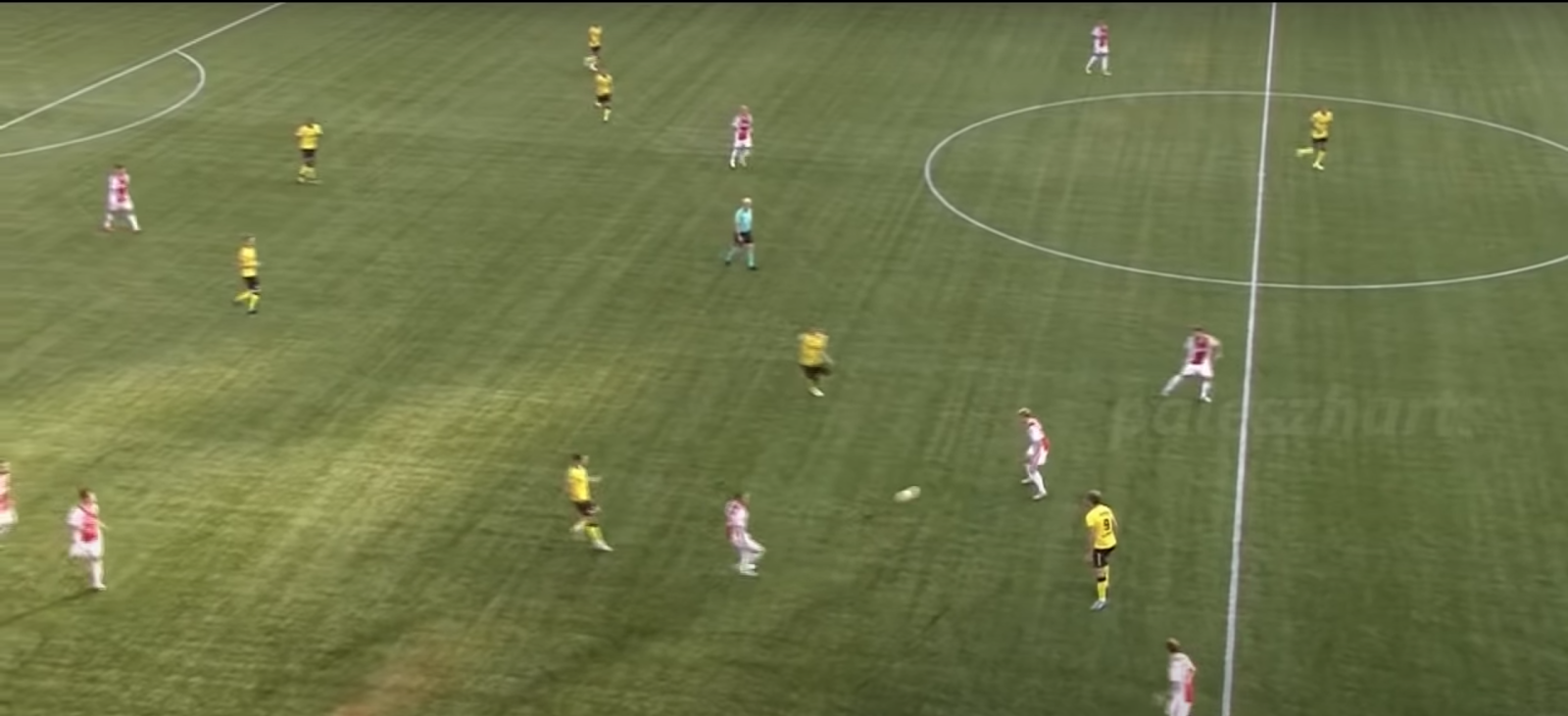
Frenkie de Jong, Ajax, and Artificial Transitions: Reverse Engineering Insights on Turnovers
Image
               A few months ago I wrote a piece on how high risk passing and an organized press can be combined to turn a side’s own turnovers into scoring opportunities . Therein, I argued that Liverpool’s crossing and diagonal heavy system is one that creates chances not just through successful passes, but also through unsuccessful ones. Essentially, these high difficulty passes into danger areas were attempted not just because of what they could create if they fell to one of Liverpool’s men, but also for what they could create if they fell to an opponent. Successful passing outcomes are by no means irrelevant by this logic, though. If Liverpool could, they’d much rather just complete every pass. And this is another facet of Liverpool’s style that seems statistically optimized – the side’s most valuable passes by expected pass value happen to be the ones we typically associate with their style of play: From LFC home games last season:...

In Defence of Turnovers – or – Seizing the Means of Concession

Image
Let’s do a quick thought exercise: Most football matches are played in league competitions. League competitions are won by collecting the most points possible. Most leagues now award 3 points for a win, 1 point for a draw, and 0 points for a loss. This point distribution system creates an interesting phenomenon: more points are allotted, in total, for matches where a side wins, than matches where the two sides draw. This results in a curious dynamic: a side that draws every match in a 38 game season will end the year with 38 points, while a side that wins half of its matches and loses half of its matches will end the year with 57 points, despite the two efforts having been seemingly the same (half success, half failure).  Now, if we are attempting to win a league title, let us assume that we have greater quality players than the majority of the league. Sides with lower tier talent generally do not target league titles, they target relegation survival, a mid table finish, or oc...

Stengs and Stengsibility: The Story of Two Eredivisie Wingers

Image
By: Kees van Hemmen If you're  reading this article there’s a good chance that you already know who Calvin Stengs is. The 21 year old AZ Alkmaar winger has been widely discussed in footballing circles for the majority of this campaign, having stolen the show in the Europa League group stages, putting in a particularly impressive – yet ultimately fruitless – performance against Manchester United in his side’s home tie against the English giants. The silky smooth inverted winger has become known, in particular, for his wand of a left foot.  Without a doubt, Stengs is one of the world’s best threaded passers in his age group. Beyond being ludicrously enjoyable to watch, it’s also almost certainly his most transferable skill as he climbs up the European league hierarchy. As I discussed at slightly greater length here , through balls create some of the highest quality chances in football: 1v1s with the goalkeeper. Regardless of league, this is a valuable asset, and one that shouldn...